


Tear trough filler is one of the most searched aesthetic treatments in the UK. It is also, according to a 2025 survey by the British College of Aesthetic Medicine, one of the treatments most frequently performed on the wrong candidate. Under-eye treatments accounted for a disproportionate share of filler correction cases that year, and the root cause was not poor technique. It was poor patient selection. The treatment itself is not the problem. The assumption that it works the same way at every age is.
If you have spent time comparing tear trough filler before-and-after photographs online and found yourself uncertain whether what you are looking at applies to your situation, that uncertainty is well-founded. Before-and-after images rarely tell you the age of the patient, the condition of their skin, or what else was treated alongside the tear trough. This article works through the clinical picture by age group, so you can approach a consultation with a clearer sense of what is actually relevant to you.
What Is the Tear Trough?
The tear trough is the sunken groove that runs from the inner corner of the eye downward towards the cheek. When this area loses volume or definition, it creates a shadowed, hollowed appearance that makes people look tired or older than they feel. Dermal filler placed precisely within this groove can restore the lost volume, reduce the shadow effect, and brighten the under-eye zone. When the treatment is carried out well by a medically qualified practitioner, the result is a subtle overall lift in facial appearance, with no visible sign of intervention.
That subtlety is exactly what most patients are seeking. The goal is not transformation. It is restoration.
Why Age Changes Everything About This Treatment
The tear trough does not hollow in the same way at 35 as it does at 55. The underlying anatomy shifts, the skin quality changes, and the relationship between the under-eye area and the rest of the face evolves considerably across those two decades. Treating all three age groups with an identical approach is one of the clearest indicators that a clinic is working from a template rather than from a proper clinical assessment.
At 35: The Problem May Not Be Where You Think
In your mid-thirties, hollowing under the eyes is frequently a mid-face issue in disguise. The fat pads in the cheek begin their early descent at this stage, and when that happens, the area below the eye loses its structural support from beneath. The hollow you see in the mirror may look like a tear trough problem, but placing filler directly under the eye without addressing the mid-face can produce results that look slightly puffy or disconnected from the rest of your face.
At this age, a thorough clinical assessment will often identify whether the trough itself needs addressing or whether restoring volume to the cheek would resolve the under-eye appearance without any direct intervention beneath the eye at all. Cheek fillers or a structured treatment plan incorporating both areas may well be the more appropriate starting point. This is precisely the kind of conversation that does not happen at clinics operating on volume rather than individual assessment.
If you are well-rested, well-hydrated, and still see a persistent hollow in natural daylight, volume loss is likely contributing. If the shadow only appears when you are tired, lifestyle factors may be doing more of the work than anatomy.
At 45: The Combination Approach
By the mid-forties, both the tear trough and the cheek above it have typically lost some of it's structure. Volume depletion is more widespread, the orbital bone becomes more prominent as surrounding tissue thins, and the groove itself deepens. At this stage, treating the tear trough in isolation is rarely sufficient. A single-site treatment may improve the hollow but leave the overall under-eye area looking inconsistent with the rest of the face.
A combination approach, addressing both the tear trough and the mid-face within a coordinated treatment plan, tends to produce more coherent, natural results at this life stage. Some patients at 45 also benefit from skin-quality treatments alongside structural filler work. Skin boosters such as Profhilo or polynucleotides can improve hydration and skin texture in the under-eye area, complementing the volumising effect of the filler rather than leaving thin or crepey skin over the top of a restored structure.
The practical concern for many professional women at this stage is not just the aesthetic outcome. It is whether the result will look obvious in a boardroom or on a video call. A well-executed combination approach should look refreshed, not altered. Anyone who has sat through a meeting wondering whether a colleague has had something done will understand why this distinction matters.
At 55: Skin Laxity Changes the Calculation
In the fifties and beyond, skin laxity enters the picture in a way that genuinely changes the clinical calculation. Filler restores volume. It does not tighten skin. If laxity is a significant factor in your under-eye appearance, placing filler without addressing that laxity can occasionally make the area look heavier rather than refreshed. This is one of the reasons tear trough filler has a higher correction rate in older patients when patient selection has not been careful enough.
That does not mean filler is off the table at 55. For many patients, a carefully placed, conservative amount of filler still produces a meaningful improvement. The key is an honest clinical assessment that identifies whether filler alone will achieve the desired outcome, whether skin-quality treatments need to run alongside it, or whether a broader facial approach such as the 8 Point Facelift would address the full picture more effectively.
How to Assess Your Own Under-Eye Area
Before booking any consultation, take a few minutes to look at your under-eye area in natural daylight, ideally near a window in the morning. Bathroom mirrors with overhead lighting are not useful here; they flatten and obscure the shadows that actually concern you in everyday life.
Ask yourself a few simple questions. Does the hollow persist when you are genuinely well-rested and properly hydrated? Does the shadow extend further down the cheek, suggesting the mid-face may be involved? Does the skin beneath the eye appear crepey or loose when you gently stretch it? Is the hollowing symmetrical, or more pronounced on one side?
A genuine hollow that persists regardless of sleep and hydration, with relatively firm skin and contained to the immediate under-eye area, is a reasonable indicator that tear trough filler may be worth exploring. If the picture is more complex, a broader facial assessment is likely to serve you far better than an isolated under-eye consultation.
Why Most Online Information Misleads You
The majority of content about tear trough filler treats it as a single, uniform treatment. Same product, same technique, same outcome regardless of the patient's age, skin quality, or facial anatomy. Clinics that book treatments without thorough assessments rarely explain why a patient may not be the right candidate right now, because that conversation does not result in a booking that day.
This leaves patients doing exactly what many professional women describe: comparing before-and-after photographs of patients who may be fifteen years younger, with entirely different facial anatomy, having had additional treatments that are not mentioned in the caption. The photographs are not dishonest in isolation. They are simply not representative of your situation, and without clinical context they are not a useful basis for a decision.
The AL Aesthetics Approach to Tear Trough Assessment
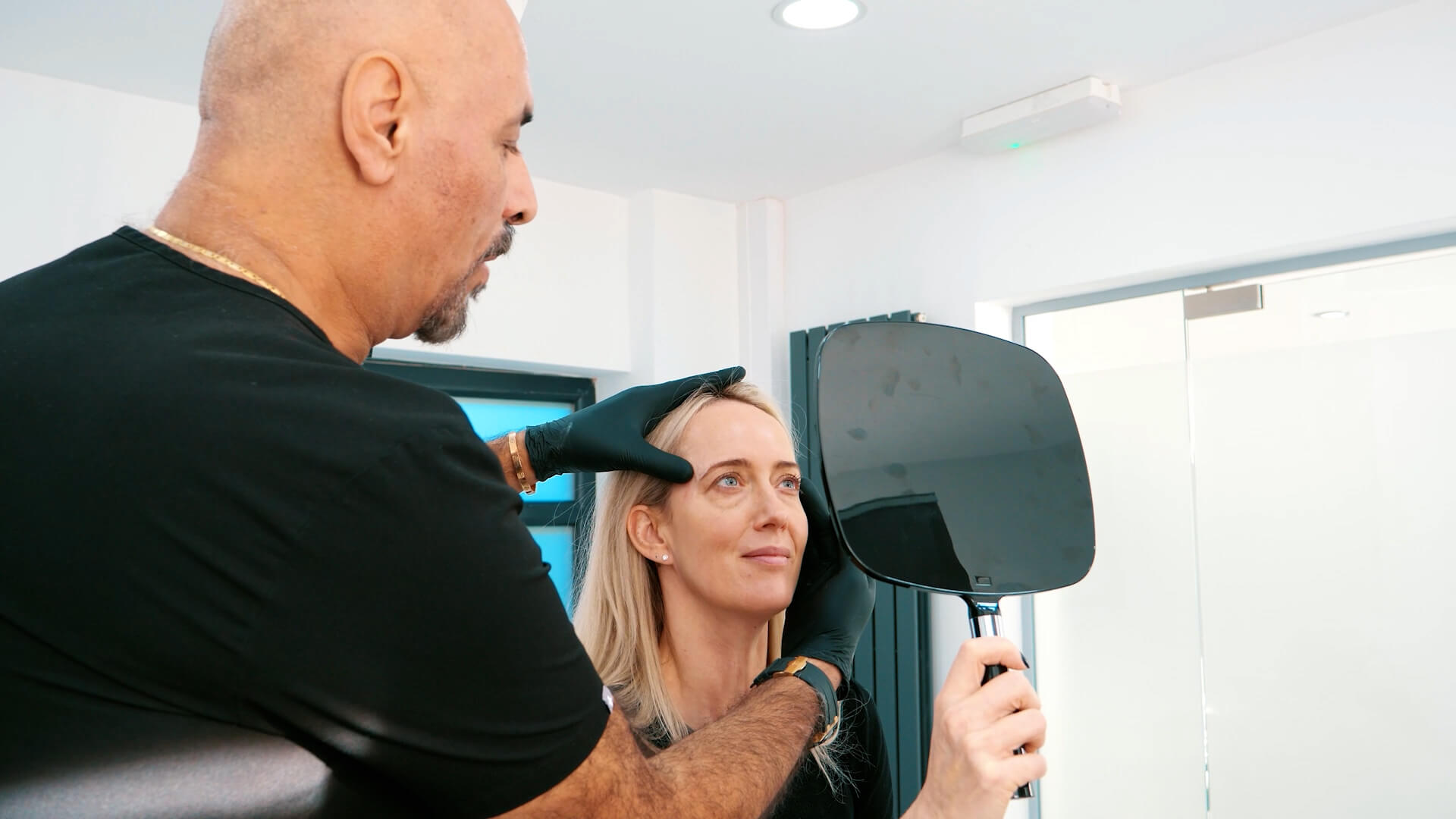
At AL Aesthetics, every tear trough consultation begins with a full facial assessment carried out by a medically qualified practitioner. The conversation does not start with the treatment. It starts with your face, your age, your skin quality, your mid-face volume, and what you are actually hoping to achieve.
From that assessment, the team will recommend whether tear trough filler is the most appropriate next step, whether a combination approach involving cheek fillers or other structural treatments would produce better results, or whether skin-quality treatments such as Profhilo should form part of a wider treatment plan. This is a CQC-registered, doctor-led clinic. The clinical discipline in the assessment process is what ensures results look refreshed rather than obvious.
Patients who come to AL Aesthetics after unsatisfactory results elsewhere frequently describe the same experience: they were assessed briefly, treated quickly, and left with an outcome that drew attention to the area rather than resolving it. A thorough consultation at the outset is not a formality. It is the part of the process that determines whether the result actually works for your face.
Making the Right Decision for Your Face
Tear trough filler can produce genuinely meaningful results at the right age and for the right anatomy. The treatment rewards careful patient selection far more than it rewards enthusiasm. Getting the clinical decision right at the outset protects both your appearance and your investment, and it avoids the more costly process of correction further down the line.
If you are considering under-eye treatment and want an honest clinical assessment rather than a same-day sales conversation, book a consultation with AL Aesthetics. The team will tell you clearly what would work for your face at this specific stage of life, whether that is tear trough filler, a broader approach, or something else entirely. That clarity is the starting point for results you will actually be satisfied with.